

The onboard system: what's fitted to the boat
Digital Vessel isn't another gadget bolted on. It's the logical layer that correlates the data coming from the boat's systems (electronics, propulsion, power, tanks, home automation, lighting) and hands it back in a form that matches what's actually happening on the water.
A note on development status: the features on this page set out the full product vision. Some are already live and validated on the prototype at sea; others are still in development. One founding principle runs through the whole project: any automation can always be switched off and overridden by hand by the person in command.
One picture, not separate screens
Today's helm stations are crowded with displays each telling part of the story: the plotter, the engine gauges, the power panel. Digital Vessel brings these streams together in a single interactive, intuitive interface.
There are no complicated menus to dig through: the interface changes what's up front to match the operating situation.
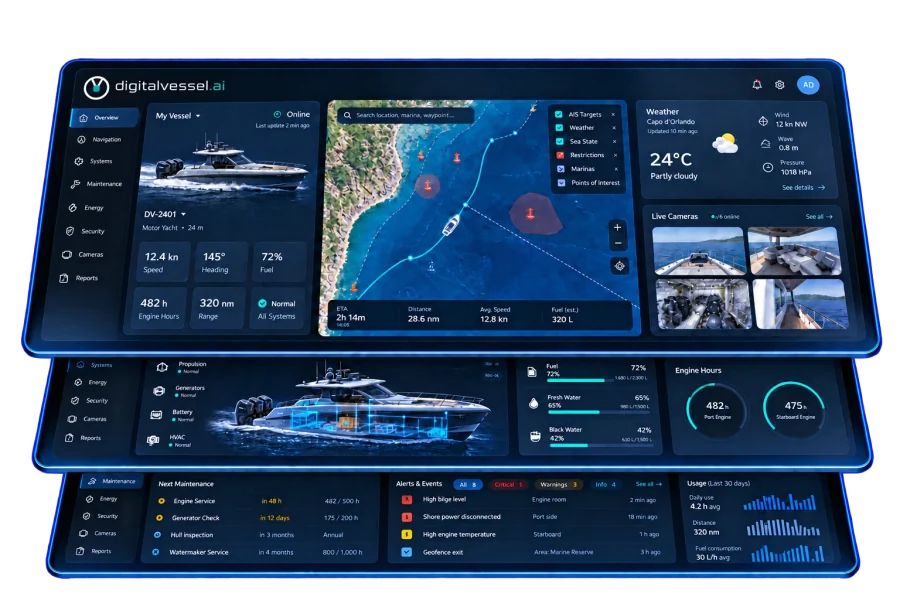
Underway
Course (distance, ETA), chart, echo sounder, AIS, radar, remaining range and propulsion data stay front and centre.
Manoeuvring and mooring
The chart makes way for the perimeter cameras, proximity sensors and the joystick, thruster and windlass controls.
At anchor
Anchor watch, tank levels, battery state, solar output and the comfort controls take over.
Hardware status: the panoramic display shown here is a hardware component currently in design. It's presented as the future direction of the product, not as something that can be fitted today.
Every system on board, managed from one place
Air conditioning, watermaker, boiler, lighting, entertainment, fold-down terraces, hatches and powered passerelles all run from a single control point, with no separate remote or panel for every system. The controls can be reached from anywhere: the helm display, the cabin touchscreens, a phone or tablet, or by voice.
The system tunes air conditioning and power use to who's actually aboard (which cabins are occupied, the time of day, the owner's preferences) so nothing runs for no reason.
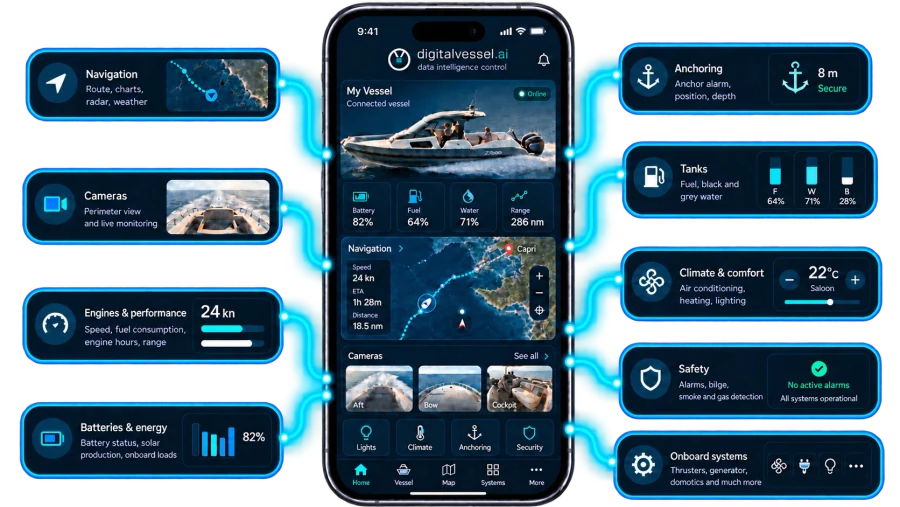
Privacy: cabin presence detection is designed to respect the privacy of owner and guests, and can be switched off at any time, cabin by cabin.
Knowing what's left, before it runs out
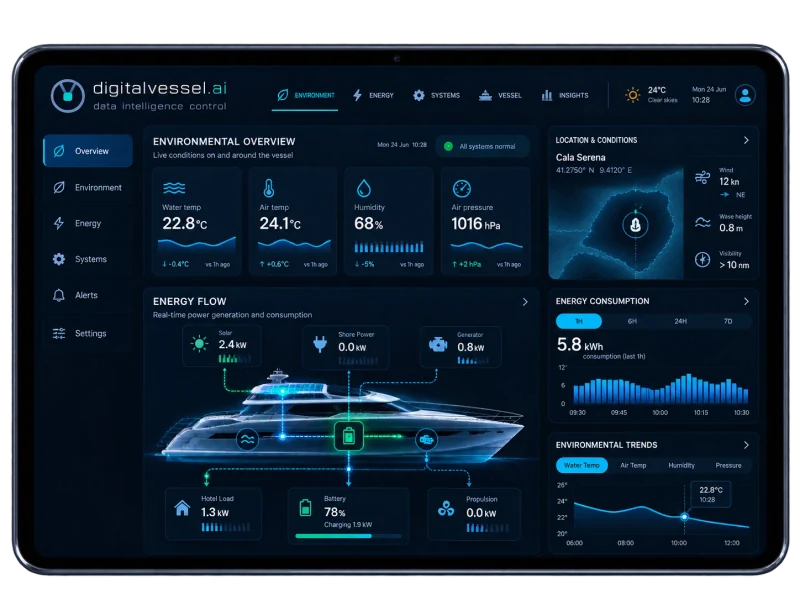
Smart load management
The system spreads electrical draw across the boat's systems, heading off peaks that would exceed the power available.
Dynamic generator management
Start and stop follow the actual charging demand of the moment, moving beyond the old logic of fixed thresholds.
Range forecasting
Digital Vessel estimates the remaining fuel and battery range based on the passage plan and live consumption, and updates the projection along the way.
Note: this estimate is a planning aid, not a guarantee. It should be read with the caution seamanship demands, and the final decision always stays with the skipper.
Spotting trouble before it becomes an alarm
Predictive trend analysis
Rather than waiting for a reading to cross an alarm threshold, the AI watches temperatures, voltages, currents, pressures and duty cycles over time. If it picks up a suspicious drift from normal behaviour, it sends an early warning.
Remote support
When needed, an encrypted connection links the boat to the yard's authorised service centre. The technician can make an initial diagnosis remotely and reach the boat with the likely parts already identified.
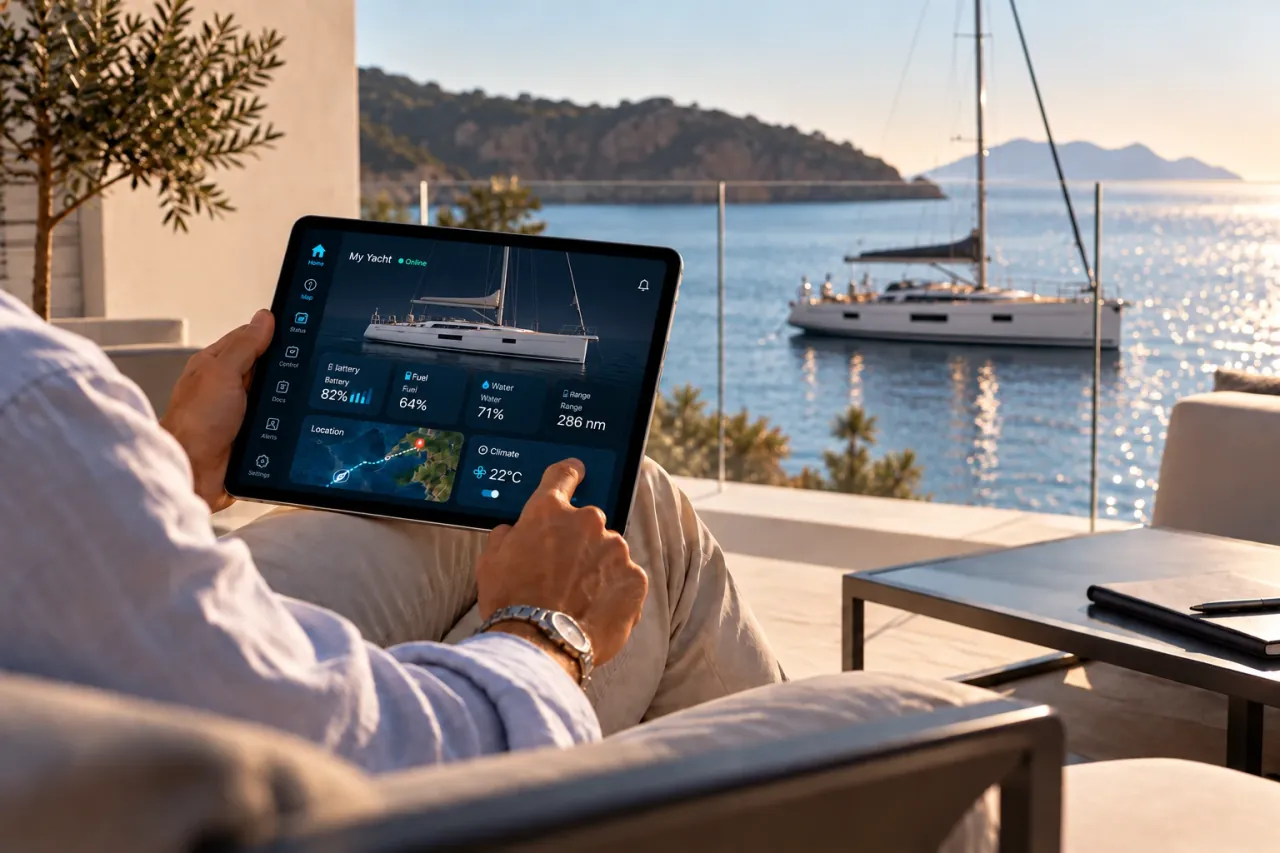
The boat in a pocket, even ashore
A native app for iOS and Android lets the owner keep an eye on the boat's status remotely (batteries, geofencing, real-time push alerts) and get things ready before arriving, bringing the air conditioning up when shore power or the battery reserve allows.
Open architecture: integrate, don't replace
The system is designed to connect NMEA 2000 devices, newer equipment on the NMEA OneNet standard and the latest wireless IoT sensors. The software architecture is built to grow over time and take on new AI models. The aim is to protect the owner's investment by working with the existing installation, not replacing it.
The "Where we are" sections on the solution pages show which features are already live on current installations.
Intelligence on board. The decision with the skipper.
A demo shows what Digital Vessel's Decision Support System means for a boat project or a fleet.