

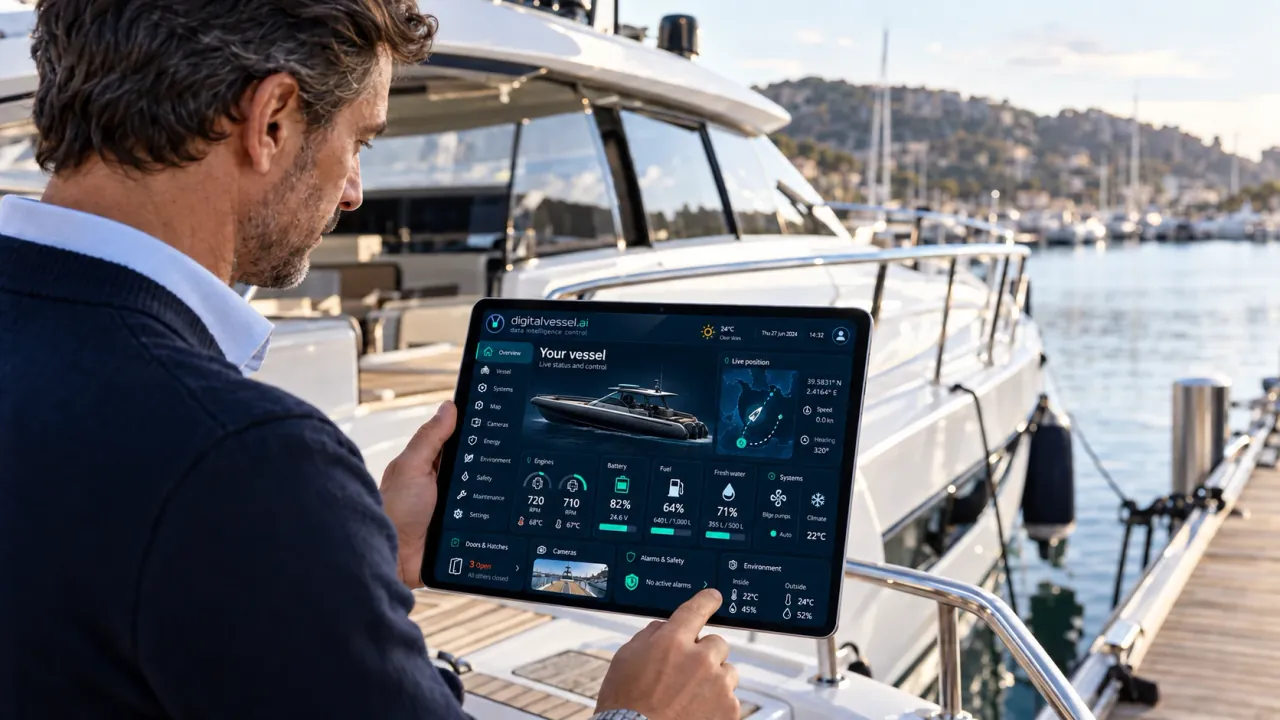
Onboard data that can be verified, not just taken on trust.
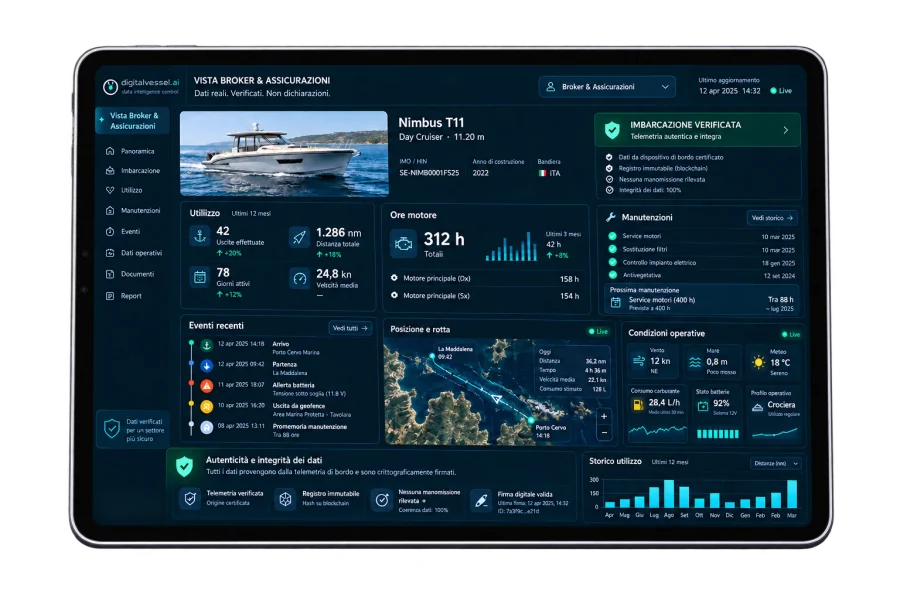
Digital Vessel collects and digitally signs a vessel's operating data (usage, maintenance, events) so brokers and insurers can assess risk, handle a claim and prevent a loss from verifiable evidence, not from a declaration.
The limits of declarations in risk assessment
Marine insurance is still built largely on questionnaires, periodic surveys and information the owner reports. These tools have their place, but they capture a single moment, not the vessel's actual working life. When a claim comes in, reconstructing what happened (engine condition, the last service, operating conditions in the hours before) often comes down to memory and witness accounts, with no objective record to turn to.
A verifiable record of onboard data
The system digitally signs the data collected on board (engine hours, maintenance, events, faults, operating conditions) to attest to its authenticity and integrity. A signed record can't be altered after the fact without the alteration being detectable, and its provenance stays traceable over time.
What changes for marine insurance
More objective risk assessment
Grounded in actual usage data and a signed history of maintenance and faults, going beyond what questionnaires and periodic surveys can show.
Faster claims handling
The vessel's technical context at the time of the event (position, system status, how the readings were trending) is already there to analyse, rather than having to be pieced together afterwards.
Active prevention
Predictive maintenance, shared within the limits agreed with the owner, can reduce risk factors and head off a loss before it happens.
A clear heading towards a new standard
Marine insurance has no shared format yet for onboard data that can be verified for underwriting or claims. That gap is one of the reasons Digital Vessel exists: to build that layer together with the people who assess risk for a living. Digital Vessel isn't offering an insurance product. It works with brokers and insurers to define which data, in which format and with which guarantees would genuinely help underwriting and claims settlement.
The insurance partner's role
A technical conversation about the parameters that really matter in marine risk assessment, and the chance to test together, on real cases, how signed data could feed into insurance workflows. No commercial commitment is required at this stage, just a willingness to look at the data together with the team.
Where we are, straight up
- todayThe system is fitted to three real vessels and has been logging data underway since summer 2026.
- todayDigital signing of onboard data has been built into the architecture from the design stage.
- in developmentValidation with insurance partners is at an early stage; there are currently no policies built on this technology.
The transparency is deliberate: anyone who assesses risk works from verifiable ground, and the maturity of the technology is the first piece of it.