


The whole fleet, from one control point.
Boats, crew, maintenance and operations brought together in a single interface. A deep, strategic view for the operations team, and a smooth, dedicated experience for the client.
Running a fleet shouldn't mean chasing emergencies
Day-to-day operations are often reactive: a boat out of action for a fault that could have been prevented, maintenance discovered the night before departure, a crew unsure which procedures to follow on that particular boat. Cutting out that friction and the dead time that comes with it takes a shared, always up-to-date view of position, condition, activity and what's due.
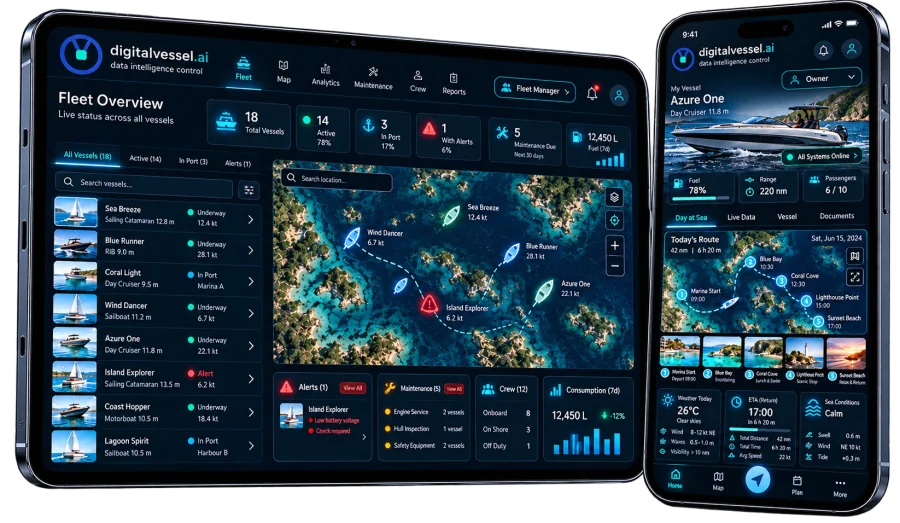
The whole fleet, one screen
The aim is to move from managing a single boat to running the whole operation, without switching tools.
Real-time view
For every boat, position, operating status, engine hours, levels (fuel, batteries, tanks), alarms, connectivity and assigned tasks are all in view.
Monitoring at the berth
Parameters stay watched even with no one aboard. An anomaly picked up with the engines off can be dealt with well before the next departure.
Fleet-wide comparison
Technical, operational and historical data can be compared across boats to pick out differences in consumption, recurring faults or patterns of use.
Every job to the right person
Roles, permissions, assigned boats, certifications and operational tasks are organised for each member of the team. Management can see straight away who needs to do what, and track progress without piecing the picture together from messages and emails.
Guided operations: from return to the next departure
Standardised digital checklists
Clear procedures for departure, safety, inventory and post-charter inspection. The checklists don't replace the crew's seamanship; they make the organisation's quality standard explicit and traceable.
Smooth turnarounds
A digital process walks the crew through closing out the trip, logging readings, reporting damage and prepping the boat. She only shows as "ready" in the system once every mandatory task has been signed off.
Maintenance planned around actual use
No more deadlines based on the calendar alone. Work is scheduled by combining engine hours, operating conditions, the manufacturer's guidance and anomalies picked up by the system. Predictive trend analysis flags suspicious drift in the readings, supports the technical diagnosis and generates alerts and tasks automatically.
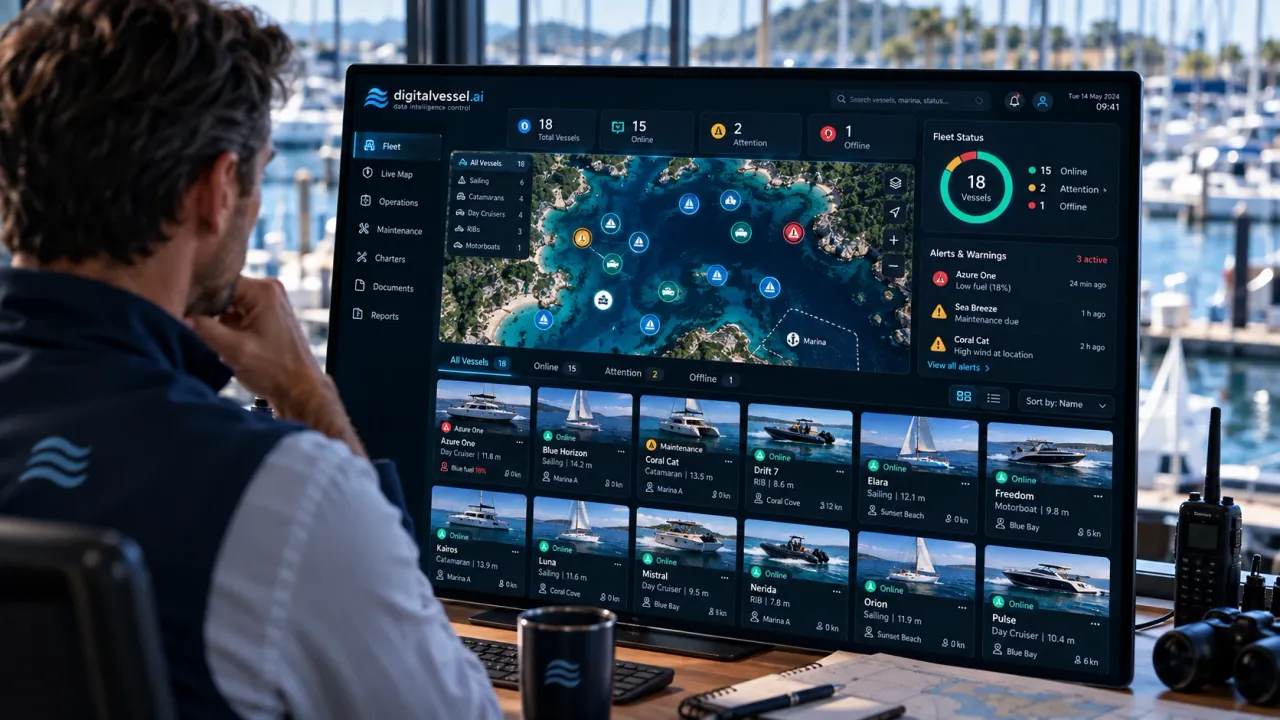
Two separate views: the holiday and the operation
The client sees only the information and services included in their charter. The operations team works from technical dashboards: alarms, consumption, maintenance, rotas. Strict permissions keep the two worlds firmly apart.
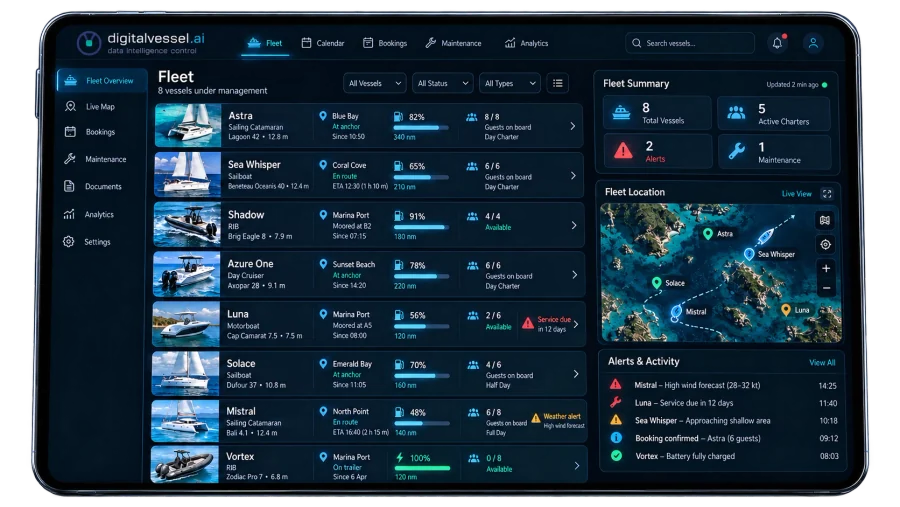
Straight answers, not spreadsheets
"Which boats have maintenance due this week?" or "Which boats are ready for tomorrow's charter?" The system answers by working through the data in real time, taking the grind out of keeping cross-referenced spreadsheets up to date. Reports on usage, downtime and efficiency back up management's strategic decisions on renewals, pricing and investment.
Adds on, doesn't replace
The architecture is designed to connect, where supported, to the software the business already runs (booking engines, management systems and invoicing) as well as the sensors and control units on board.
Activation comes with support: the Digital Vessel team works alongside the operator on setting up the fleet, importing data, defining maintenance rules and training crew and operators.
Where we are, straight up
- todayThe system is fitted to three real boats and has been logging data underway since summer 2026.
- todayFirst two commercial installations under way since July 2026.
- in developmentSoftware platform evolving, dedicated hardware in design.
- comingNew installations follow the roadmap and agreements with partner operators.