


A refit that doesn't end at handover.
Digital Vessel goes aboard boats already afloat, on the electronics they already have. For a refit yard, it's a new service to offer clients across the existing fleet, and a way to stay in touch with the owner once the boat is back in the water.
Today, the relationship lasts as long as the job
The boat comes in, the work gets done, she goes back. From then until the next phone call, the yard knows nothing about how the engines and systems are doing. Every diagnosis starts from scratch, and the quote is based on what can be seen with the boat on the hard, not on how she's been running for the past months.
A new service for the fleet that's already out there
Every boat afloat is a potential client, not just the new ones. Fitting Digital Vessel slots into a refit or a scheduled maintenance job, and gives the owner a real upgrade: bringing the boat up to date without ripping out her electronics.
Diagnosis before anyone picks up a spanner
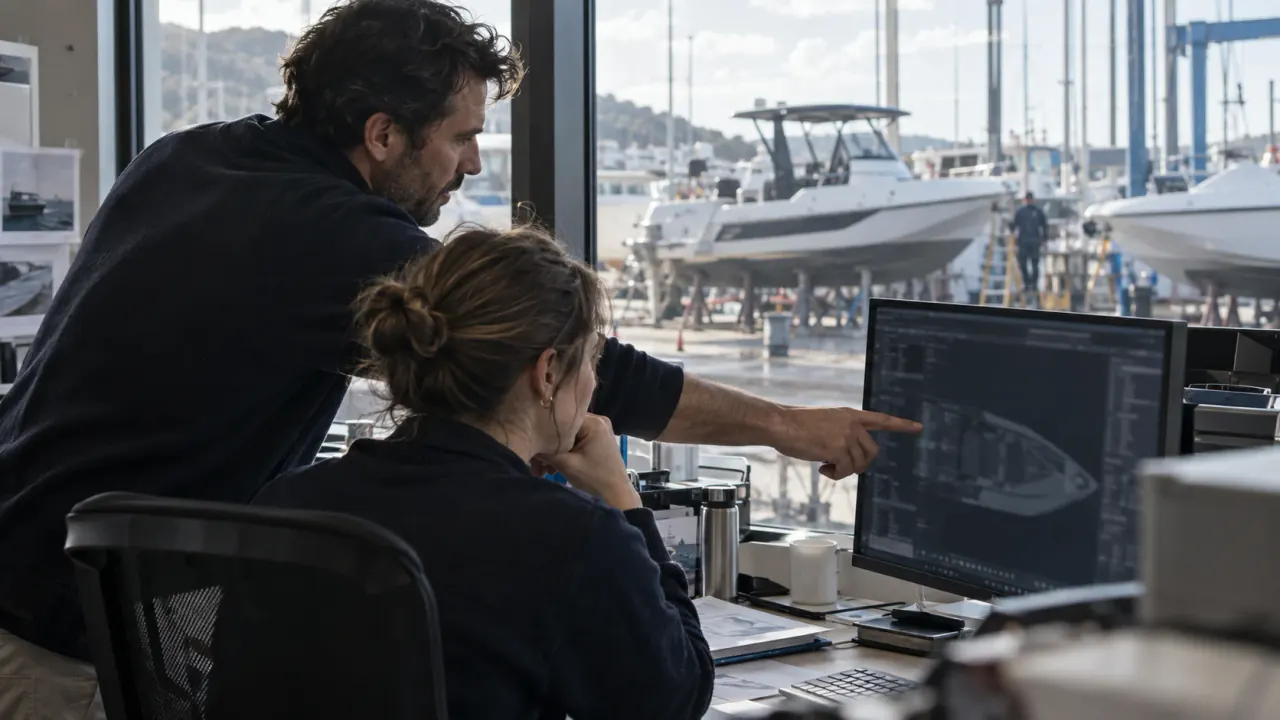
When the boat comes into the yard, her history shows how the engines and systems have been running: temperatures, pressures, consumption, recurring faults. The quote starts from what actually happened, not just from what can be seen, and there are fewer surprises once the work starts.
Monitored winter storage
Boats in the yard's care stay monitored while they're laid up: bilge, batteries, power, access. It's an extra service to offer the owner, and a way to catch a problem before the boat goes back, not after.
The yard's work stays on record
Every job goes into the boat's digital history, signed and impossible to alter without it showing. The yard's name stays with the boat once she's back in the water, and the owner has hard evidence of the work done, which also counts when it comes to selling.
A relationship that carries on
With the owner's permission, the yard gets the context of anomalies on the boats it looks after: it can propose the right job at the right time and plan maintenance around actual use. Later alerts become the yard's next job, instead of going to someone else.
How it goes aboard
Survey and compatibility check
The systems, communication buses and available power are assessed. Compatibility is checked boat by boat.
Installation
The hub connects to the buses and sensors already aboard (navigation systems, engines, power, tanks and analogue sensors) according to the compatibility matrix, plus any dedicated sensors needed. The gateway handles connectivity, mobile or satellite.
Configuration
Thresholds, alerts and permissions are set with the owner, to match how the boat is actually used.
Activation and handover
The app goes live on the owner's devices, with a short introduction at handover.
Below decks, in brief
No boat exposes a public IP address to the internet, data is signed at source and access is organised by role: each yard sees only the boats entrusted to it. Hardware and firmware are being developed for type approval by IACS classification societies, starting with RINA.
Where we are, straight up
- todayThe system is fitted to three real boats and has been logging data underway since summer 2026.
- todayFirst two commercial installations under way since July 2026.
- in developmentSoftware platform evolving, dedicated hardware in design.
- comingRetrofit installations are assessed case by case, starting with a compatibility check.
The partner programme
Refit yards coming aboard at this stage become installation partners: they receive technical training and documentation for their own technicians, and help shape the retrofit procedures and the services they'll offer their clients. For every installation, the partner yard earns a recurring share of the subscription taken out by the owner.